Localisation
Product, marketing and policy content adapted for Hausa-speaking markets so it reads as though it was written here first, rather than translated into here.

Editing, proofreading, terminology work and cultural review for content going to Hausa-speaking readers in Nigeria, Niger and the diaspora. We check more than the grammar: we check that the message still means what you intended in this market.
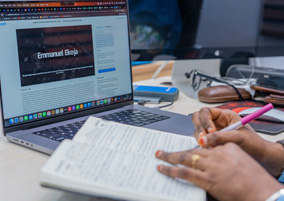
Marketing lines, product names, policy language, training material and public messaging all carry assumptions that do not survive translation. A sentence can be grammatically perfect Hausa and still confuse the reader, sound too formal for the medium, or mean something more blunt than you intended. Our job is to catch that before publication rather than after.
We review meaning, tone and register, then rewrite where a literal version would read like a translation. Where a phrase is culturally loaded — greetings, titles, family terms, religious references — we tell you plainly what will work and what will not, and why.
We also support teams producing a lot of content over time: building a glossary and house style so terminology stays consistent across documents, writers and years, including when more than one translator is involved.
Individually or together, depending on where your content is and where it is going.
Product, marketing and policy content adapted for Hausa-speaking markets so it reads as though it was written here first, rather than translated into here.
Existing Hausa or English text corrected for grammar, spelling, punctuation, consistency and clarity — before it reaches print, broadcast or a live website.
An honest read on tone, imagery, names, examples and sensitivities. We tell you what will land well with your audience and what will quietly undo the message.
Glossaries and house style documents so that your terms, names and phrasing stay identical across many documents, several translators and multiple years of work.
NGO reports, policy briefs, manuals, proposals and training packs prepared for Hausa-language readers, with the structure and headings kept intact.
A last check of translated or locally produced content shortly before publication, catching the inconsistencies that appear when several hands have touched the same text.
Send the files and tell us who will read them, where they will appear, and what you are trying to achieve with them.
We confirm the register, the terminology to keep fixed, and whether you want a light edit or a full adaptation for the market.
The work is done by a native Hausa editor with subject awareness, who flags anything that needs a decision from you rather than deciding it silently.
You receive a clean version ready to publish, and on request a summary of the changes and the reasoning behind them.
If you are planning a translation, ask us to review a sample first. A short cultural read on one page often shows what needs adapting before you commit to the cost of the whole document.
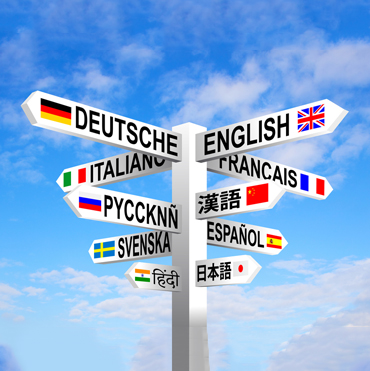
Translation produces a Hausa text. Localisation and editing check that the text actually works for the people who will read it: the tone, the examples, the terminology and the cultural assumptions. The two are often commissioned together, and we are happy to handle both.
Yes, and it is one of our most common requests. Text translated elsewhere often reads as “translationese” — technically correct but unnatural. We smooth that out while keeping your meaning and your terminology intact.
Yes. Hausa to English as well as English to Hausa, including editing Hausa source text for publication in English and the reverse.
Always. We build a glossary from your existing documents and approved wording, then keep to it. If we think a term will not be understood by your audience, you will hear our reasoning — but the decision stays with you.
Share a sample and tell us who it is for. We will tell you what needs adapting, what can stay as it is, and what it will cost to finish the job properly.